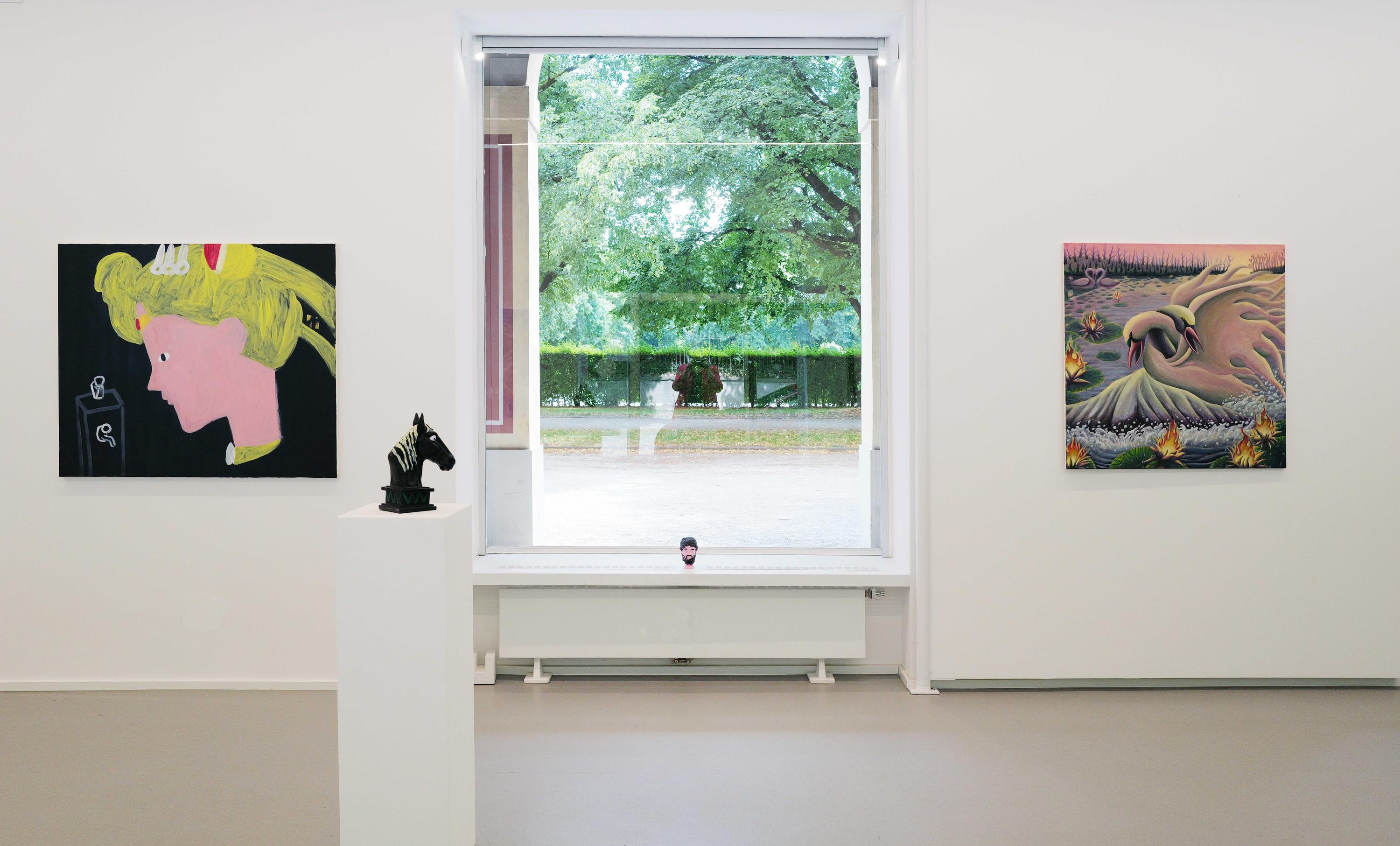
The idea of the world, of life as a stage, is a universal image of human experience: a place where roles are assumed, identities are shaped, and relationships become visible. Between performance and reality, situations full of tension arise — transitions between visibility and concealment, moments of pause and transformation. Figures appear in fragile balance; light and composition guide perception; gestures carry meanings that point beyond what is immediately visible. What matters is not only the event itself, but the gaze that perceives it and gives it meaning.
It is at this intersection of image, atmosphere, and perception that Jimmy Vuong and Lee Chung-Li, alias Lilidelacrows, work. Their pieces understand the theatrical not as mere staging, but as a fundamental condition of human experience. The exhibition asks how identity is formed, how reality is shaped through encounter and observation, and how life itself transforms into a multilayered interplay of presence, projection, and memory.
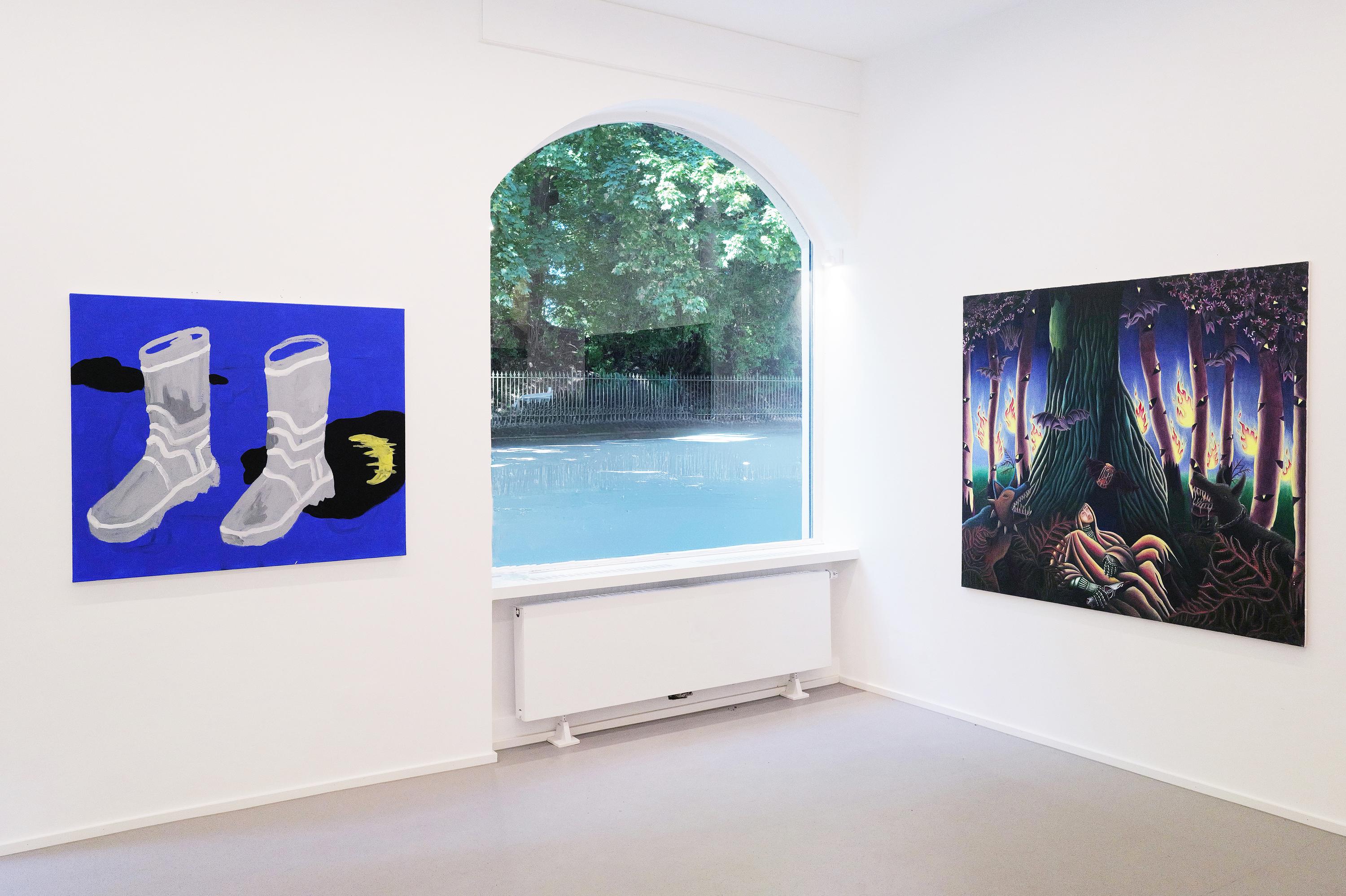
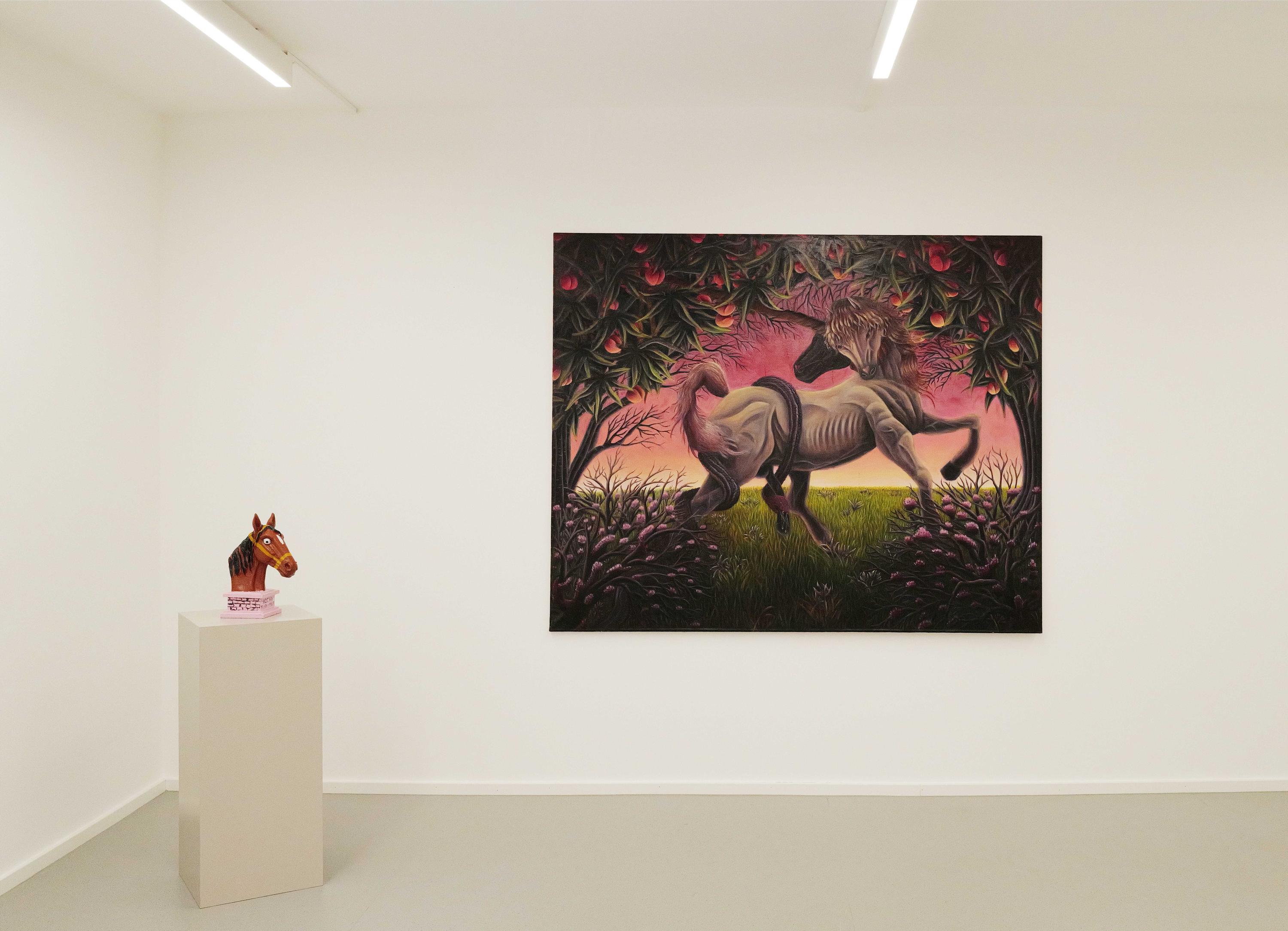
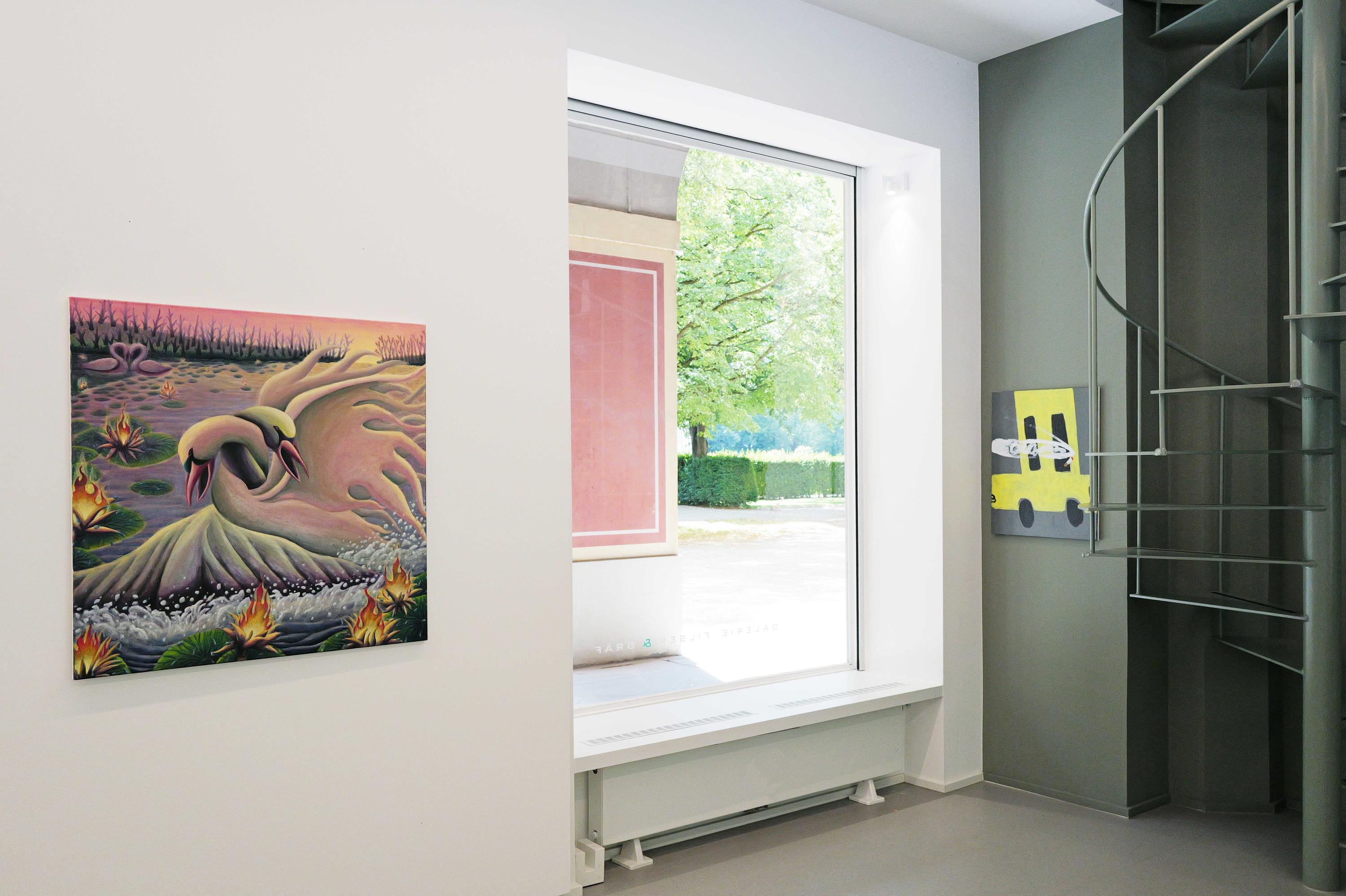
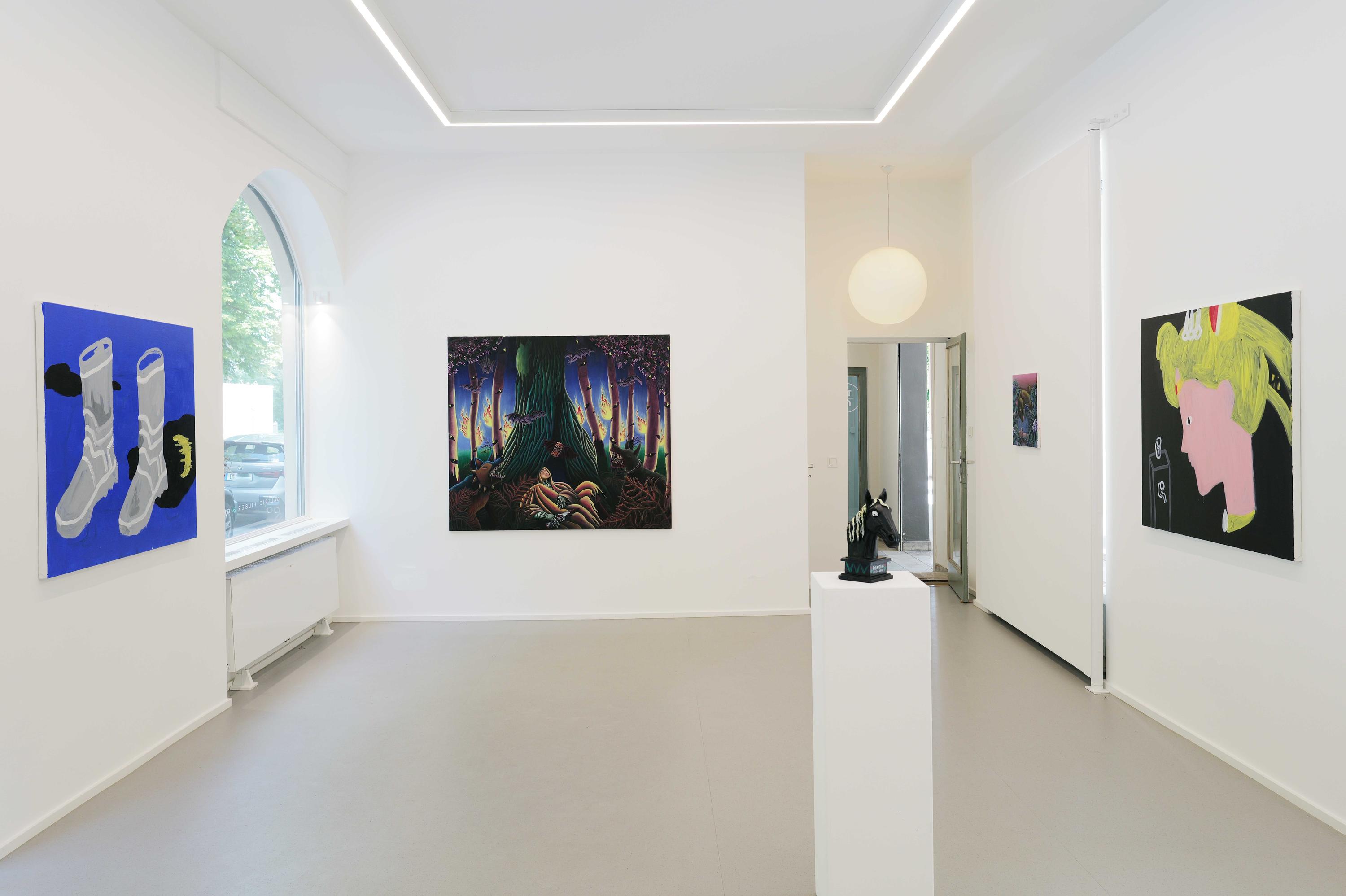
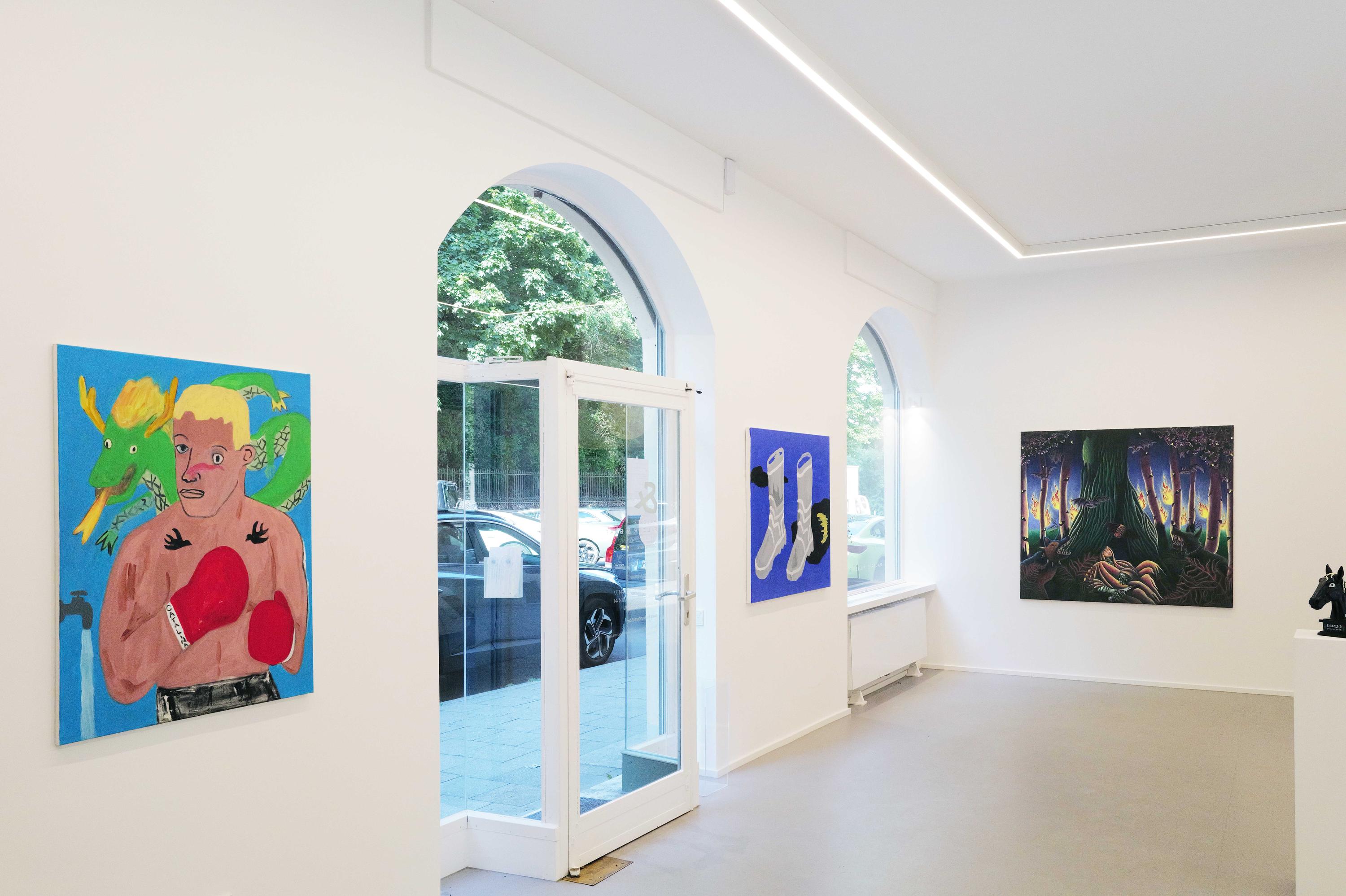
Jimmy Vuong (born 1995 in Munich) is currently completing his diploma at the Academy of Fine Arts Munich in the class of Prof. Dr. Schirin Kretschmann and is a scholarship holder of the Studienstiftung des deutschen Volkes. Working exclusively in oil on canvas, Vuong develops densely layered pictorial spaces that consistently resist any clear resolution. His compositions populate figures, animals, and plants in moments of psychological condensation — ritualistic actions, quiet catastrophes, or unresolved tension. Formally, Vuong draws on ornamental and symbolic pictorial traditions while simultaneously undermining illusionistic spatial depth, creating a pictorial stage that feels at once archaic and urgently contemporary.
What makes Jimmy Vuong’s work particularly compelling is the tension between what is visible and what remains unspoken. His paintings often depict the moment just before a possible change — an instant of tension in which something could tip, without it becoming clear what happens next. The everyday becomes a stage, and the viewer becomes a silent witness to a scene whose outcome remains open. The titles of his works — such as WENN DORNEN BLÜHEN WOLLEN, CUTTING THE TIES OF ALL THE LOVED ONES, or UM DEN LETZTEN TANZ BITTEN — do not explain the images in any definitive way. Instead, they open up emotional and personal spaces of association without prescribing a fixed narrative. Themes such as love, loss, longing, and transience are treated by Vuong with great restraint. It is precisely this openness that creates room for the viewer’s own memories and feelings. The theatrical quality in his work arises not through dramatic effects, but through a particular attentiveness to mood, body language, and staging. His paintings show life as something fragile and yet intense — as a succession of roles, encounters, and moments in which closeness and uncertainty often coexist.
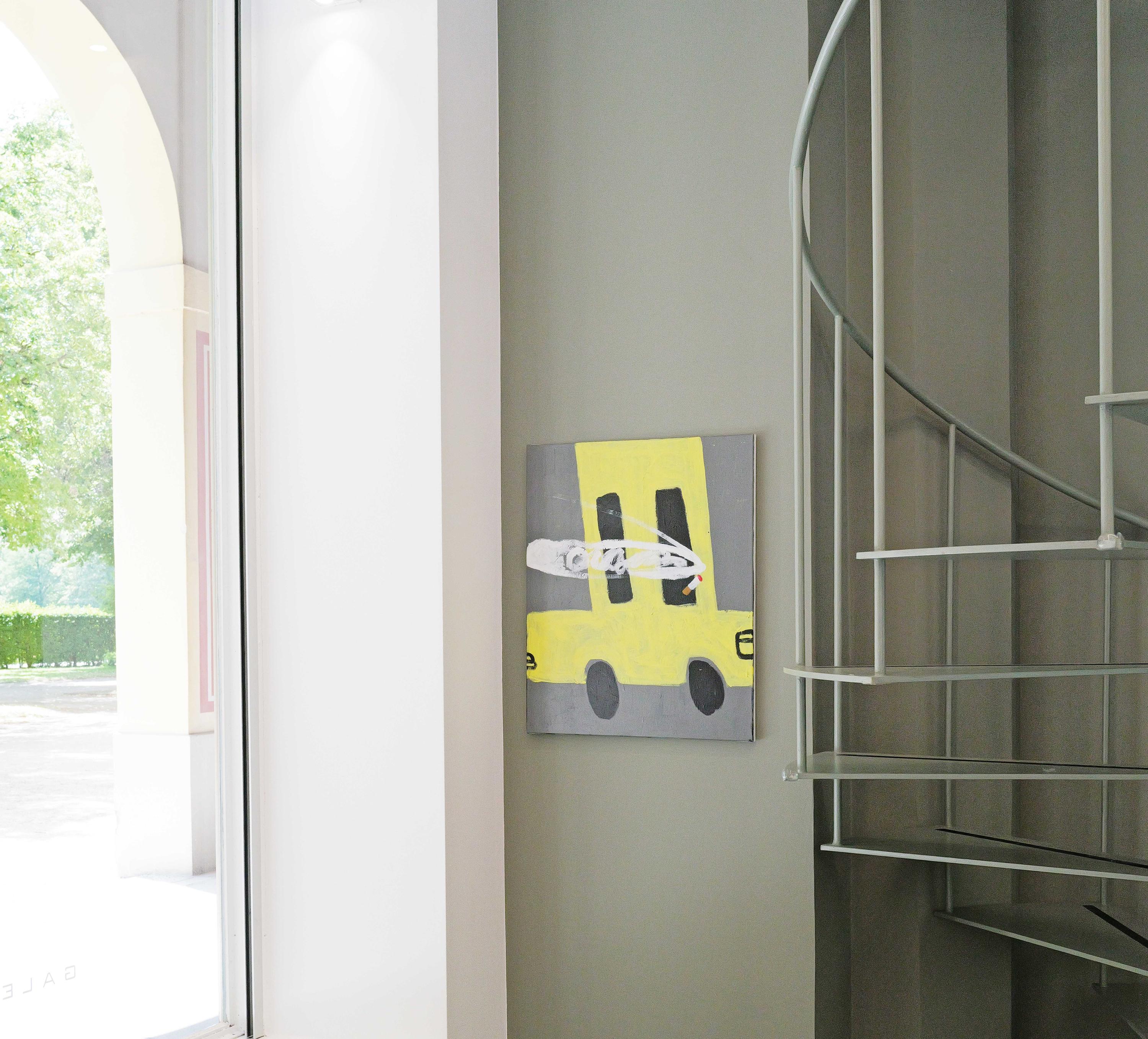
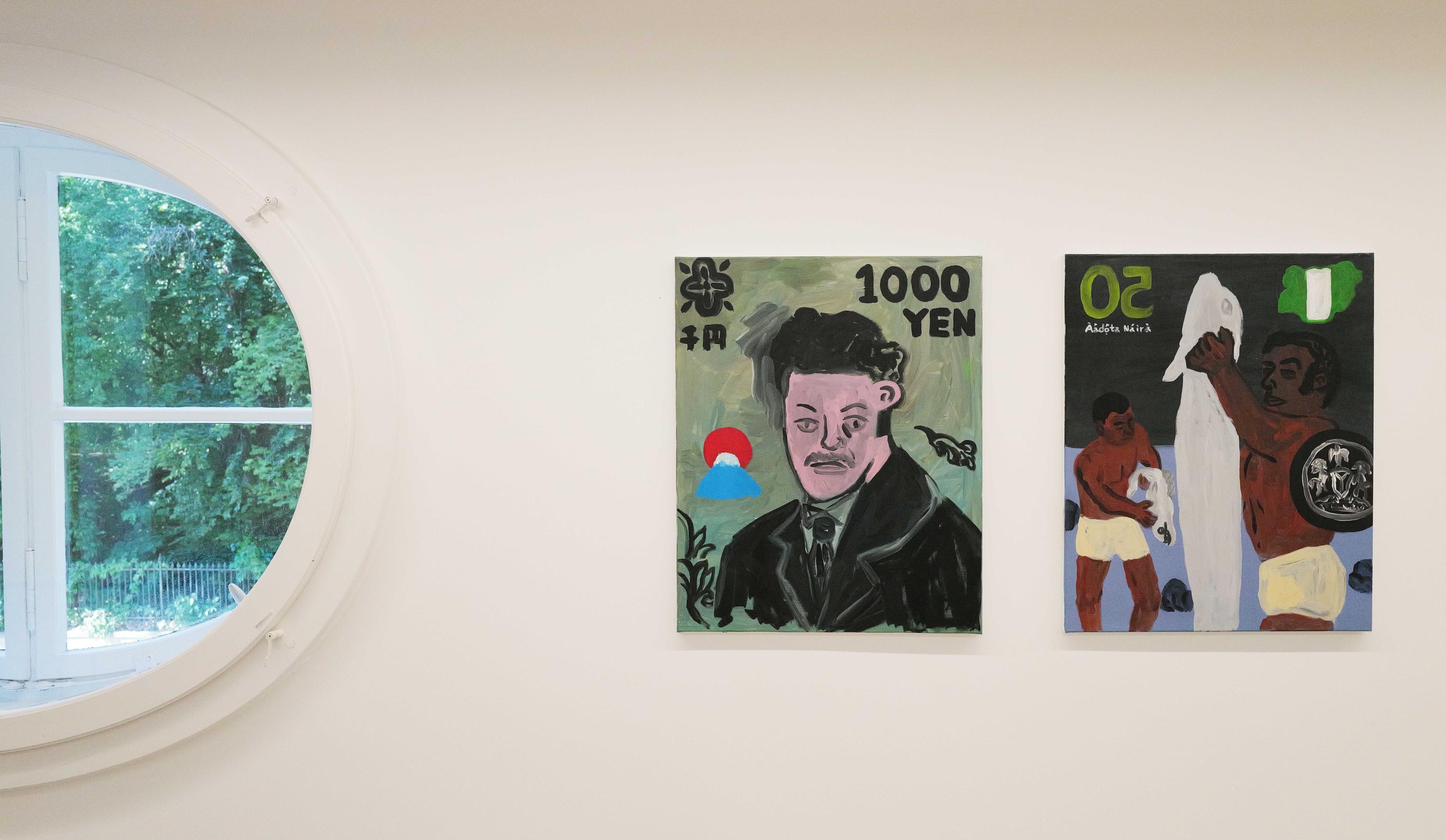
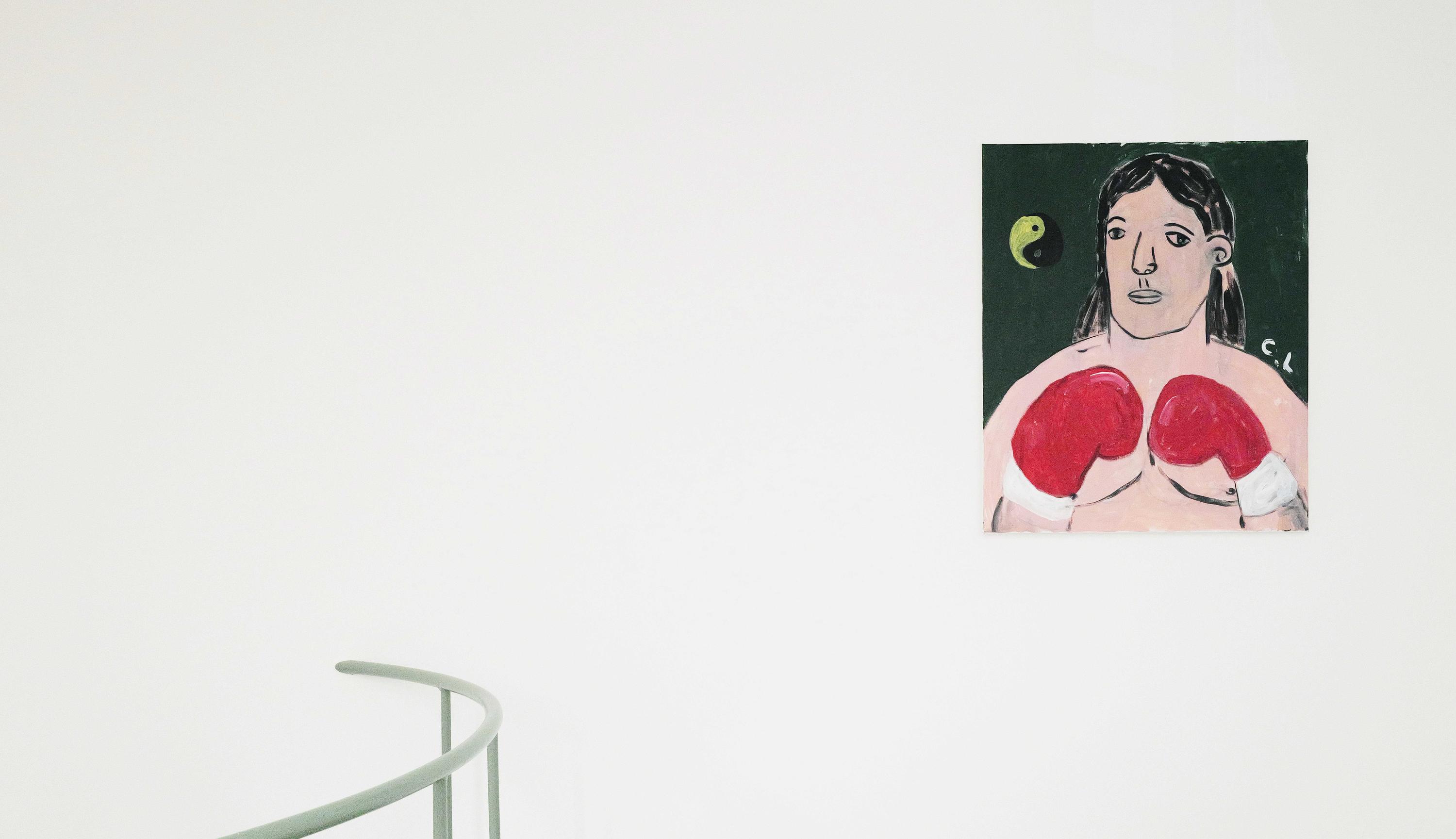
Lee Chung-Li (born 1984 in Taipei), who works under the pseudonym Lilidelacrows, is a painter, musician, and former music video director, as well as the lead singer of the band Faint Crow. He studied Media Communication Design at Shih Chien University in Taipei. In 2024, he made his debut with his first solo exhibition in Tokyo, followed by further successful shows at Tartch Gallery in Taiwan. With this group exhibition, we are delighted to present his work to a German audience for the first time.
His artistic practice has been intermedial from the outset. The visual language he has developed as Lilidelacrows belies its true complexity at first glance: what begins with childlike line work and intense color reveals itself on closer inspection as a body of work permeated by dark humor and laconic melancholy. Behind the apparent lightness lies an analytical distance that does not lament, but observes with precision. Lilidelacrows finds his stage in the familiar: in the park of his childhood, in the incidental rituals of everyday life, and in the small, often overlooked moments of wandering. His works turn their gaze toward situations that appear unremarkable and, for that very reason, speak to something universal. With a fine sensibility, he observes human idiosyncrasies, quiet absurdities, and those brief instants in which closeness, melancholy, and humor are simultaneously felt.
Particular attention is paid to the peripheral figures of family stories. In the series The Lonely Uncle, he places at the center a figure that feels familiar to many and yet rarely receives much notice: the uncle who shows up alone at holidays, brings along a hand-carved wooden figurine or an Italian sausage, and always seems to stand just slightly outside the family dynamic. It is precisely in their unassuming quality that these figures become unexpectedly moving protagonists.
Work titles such as The First Lonely Uncle, Haven’t Been Invited to a Lion’s Club Yet, or Learning Magic After Work tell no tragic stories. Rather, they are carried by a tender irony that never feels mocking. The humor in these paintings creates no distance — it creates closeness. One smiles at these figures and feels, at the same time, that their absence would leave a gap.
We would like to express our sincere gratitude to TARTCH GALLERY Taipei / Taiwan for their generous collaboration in bringing this exhibition to life.