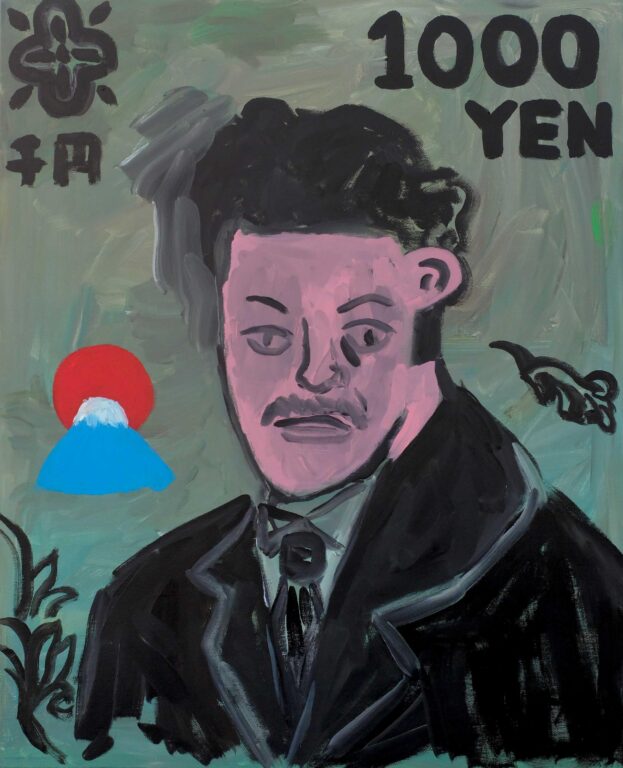
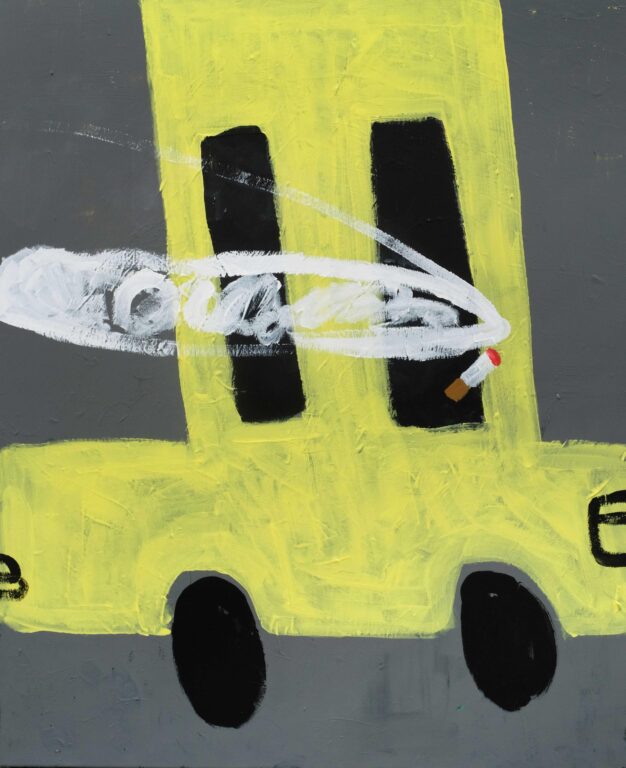
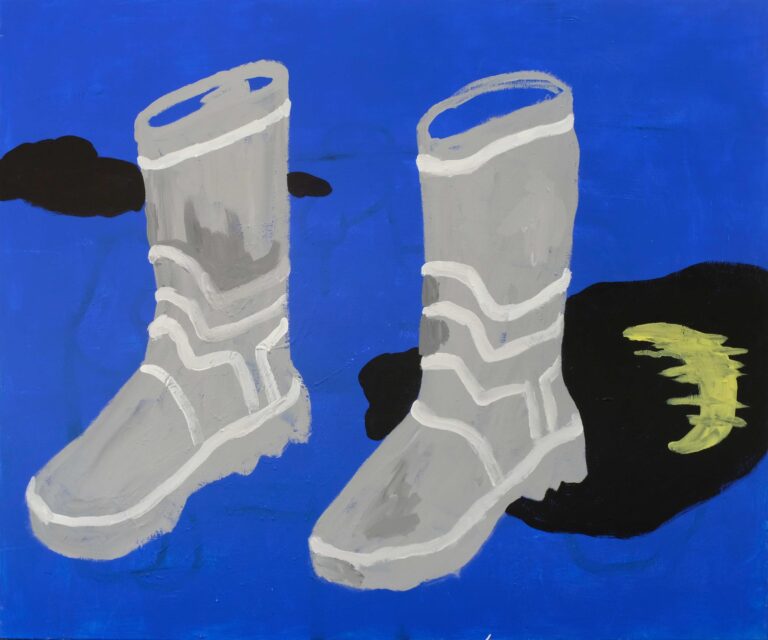
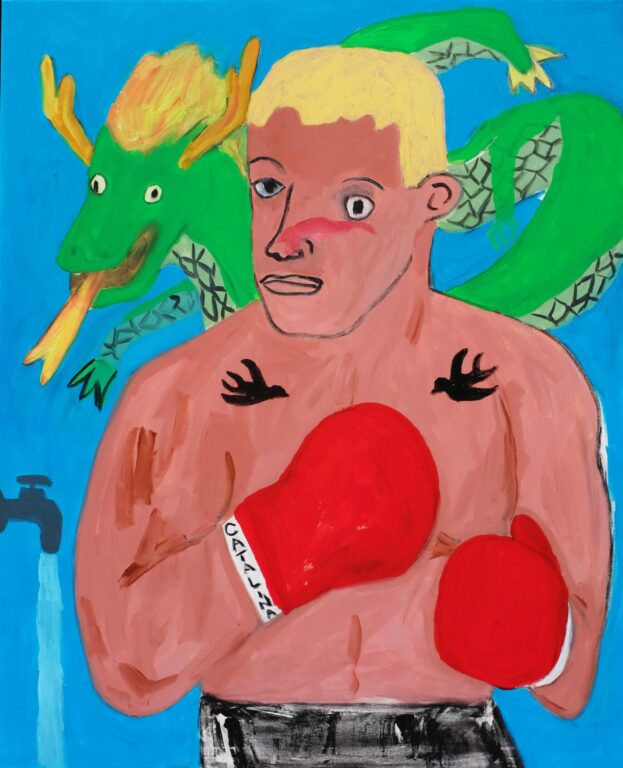
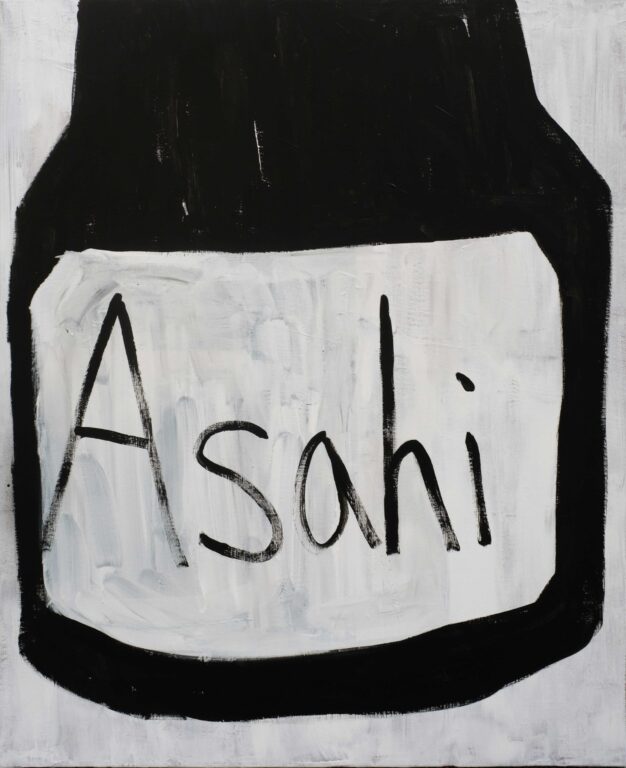
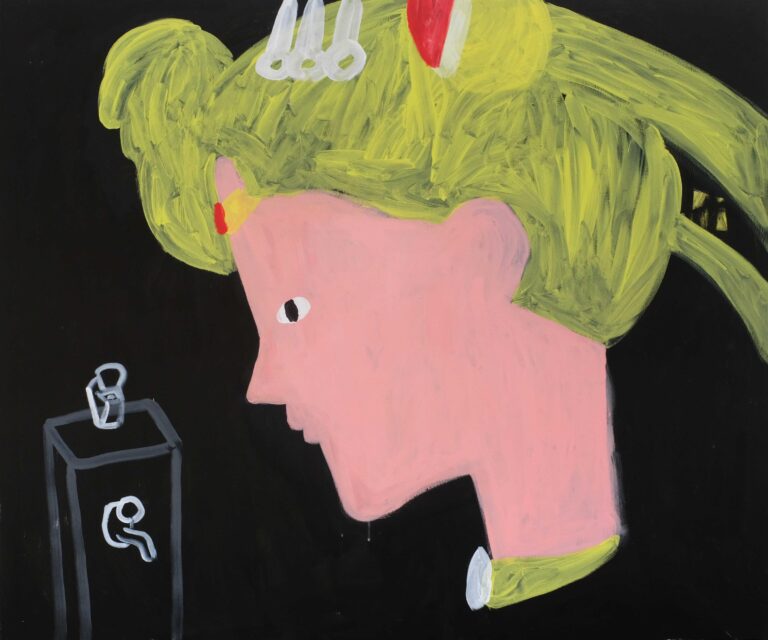
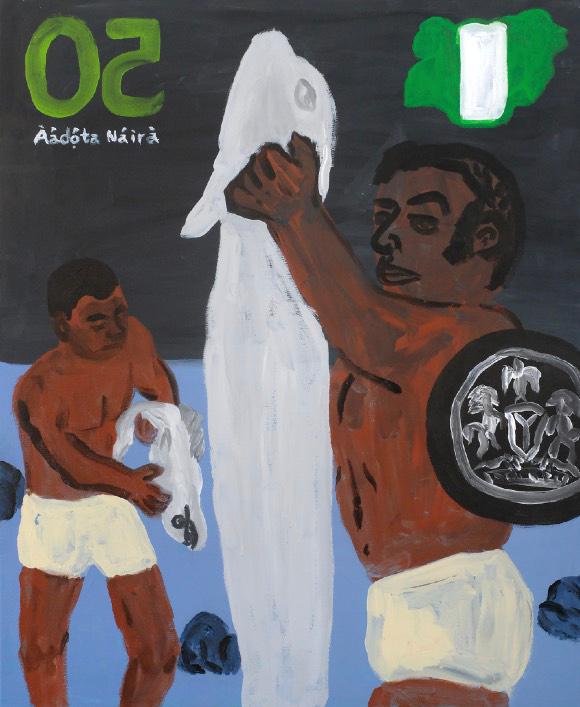
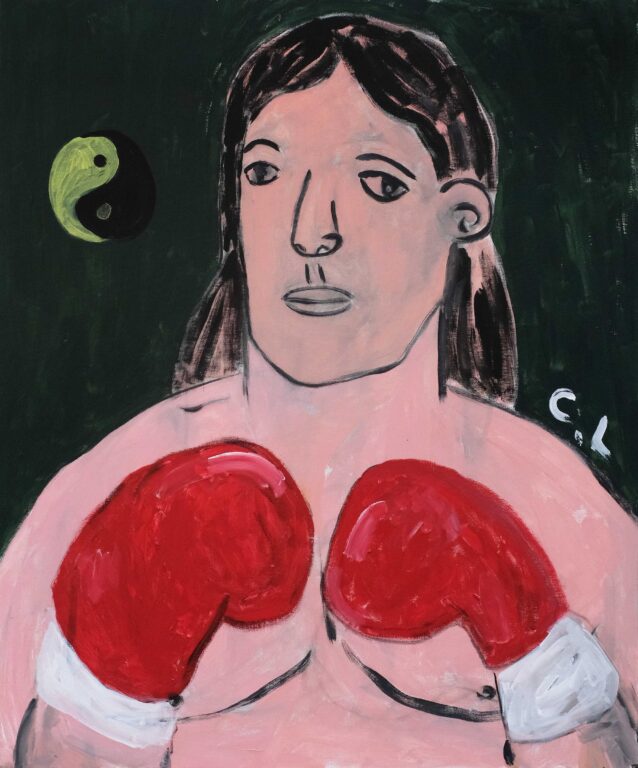
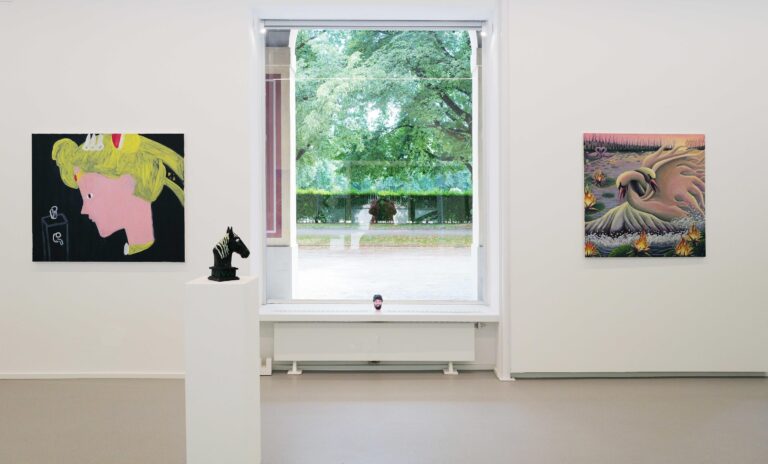
Lilidelacrows is a painter, musician, former music video director, and the former lead singer of the band Faint Crow. He studied Media and Communication Design at Shih Chien University in Taipei. In 2024, he made his debut with a first solo exhibition in Tokyo, followed by a series of successful exhibitions at Tartch Gallery in Taiwan. With the present group exhibition, we are delighted to introduce his work to a German audience for the first time.
From the outset, his artistic practice has been inherently interdisciplinary. The visual language he has developed as Lilidelacrows conceals its true complexity at first glance: what begins with childlike line work and vibrant colors reveals itself, upon closer inspection, as a body of work permeated by dark humor and understated melancholy. Beneath its apparent lightness lies an analytical distance that does not lament but observes with precision. Lilidelacrows finds his stage in the familiar: in the park of his childhood, in the incidental rituals of everyday life, and in the small, often overlooked moments of wandering and observation. His works focus on situations that appear unremarkable and, precisely because of this, speak to something universal. With remarkable sensitivity, he captures human idiosyncrasies, quiet absurdities, and those fleeting moments in which intimacy, melancholy, and humor become simultaneously palpable.
Particular attention is given to the peripheral figures of family narratives. In the series The Lonely Uncle, he places at its center a character who feels familiar to many and yet rarely receives attention: the uncle who arrives alone for family holidays, bringing a hand-carved wooden figurine or an Italian sausage, while always seeming to exist slightly outside the family dynamic. It is precisely through his inconspicuousness that this figure becomes an unexpectedly moving protagonist.
Titles such as Lonely Uncle“ or „Lonely Never a frown with golden brown” do not tell tragic stories. Rather, they are imbued with a tender irony that never turns cynical. The humor in these images does not create distance but intimacy—we smile at these characters while sensing that their absence would leave a void.